
Borsch or Borscht

level of difficulty: medium

My baba used to say, “Borsch is not a soup, borsch is a meal!” The dish, so quintessential to eastern Slav kitchens, but also featured prominently on the tables across Central Asian “stans” (given the shared history that mixed peoples and foods across great distances (sadly not always by choice!)) but hailed as a Ukrainian invention (although this point is somewhat contested by Poles who occupied parts of Ukraine for centuries). The spelling of the name of the dish isn’t settled either : the Slavs call it borsch – without the “t”; The “t” on the end comes from Yiddish as the soup was first introduced to North America by the Ashkenazi Jewish immigrants from eastern Europe. The soup (read: meal) is as rich in flavour as it is in history. It exists in regional variations, but always includes queen beet. A dish that truly tells a story rich in history and unique flavour so comforting to millions of people in the Eurasian region of the world.

The dish is not complicated to make, but I assessed it as at a level of difficulty “medium” because it may be unfamiliar to some readers, but also there are a few steps involving different techniques – not quite a one pot meal. But it is absolutely worth your time to make this hearty, sweet and sour, nutritious king soup that’s, really, a meal.
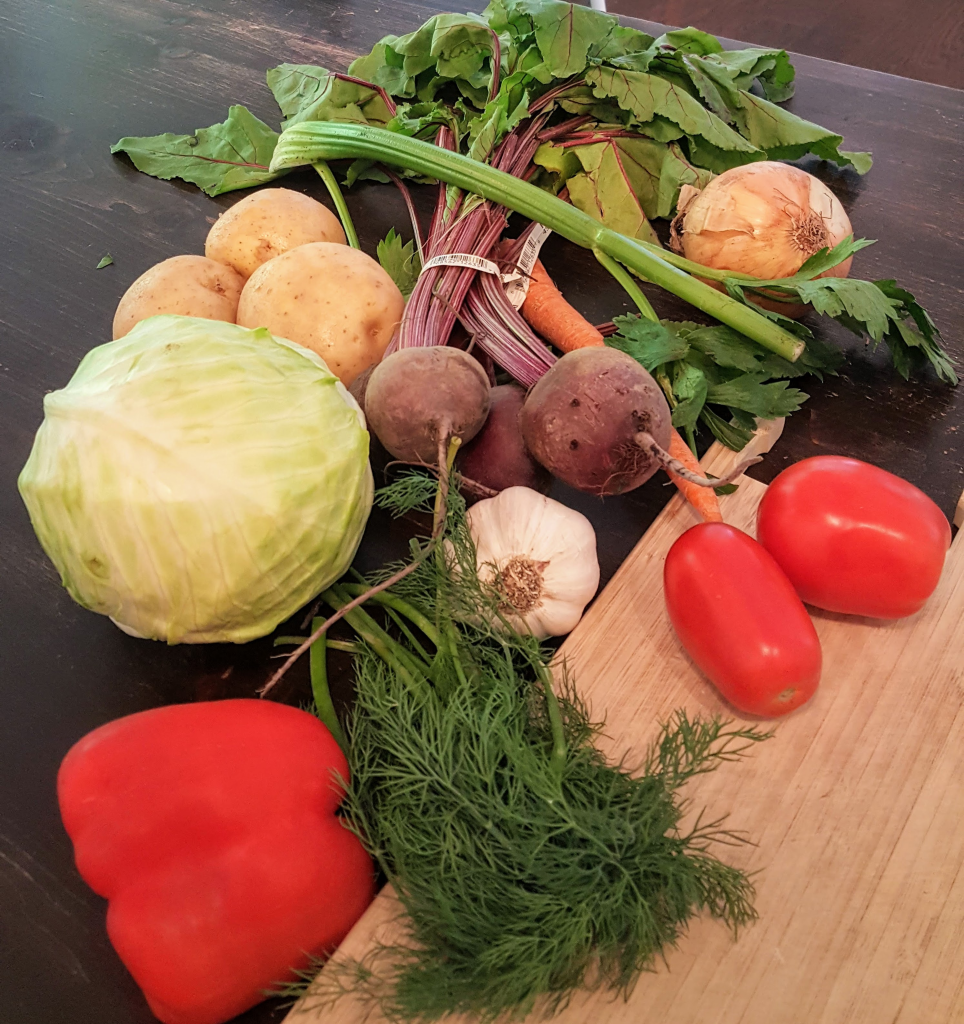
Ingridients

  • 1 medium yellow onion
  • 1 medium carrot
  • 1/2 sweet red pepper
  • 1 feather of celery (optional)
  • 2 medium beets
  • 1 large potato
  • 1/3 of cabbage head
  • 2 cloves of garlic
  • 1 small tomato
  • 2 table spoons of tomato paste
  • 5-6 cups of Stock (chicken, beef, pork)
  • fresh dill
  • 1/2 teaspoon dried oregano
  • salt and pepper to taste
  • sour cream for garnish (optional)

Method

Step 1

  1. Peel and dice the onion, red pepper, carrot, and celery (if using)
  2. Melt some butter in the skillet and add diced veggies (onion, pepper, and carrot).
  3. Chop the tomato and add to the skillet as well.
  4. Peel and grate one of the two beets.
  5. Once the skillet veggies have softened, add the shredded beet and sauté everything for about 10 minutes.
  6. Peel and press or dice the garlic and add to the skillet vegetables. Add tomato paste. Add oregano. Season with salt. Sauté everything stirring for a couple of minutes. Turn the heat off and set aside.

Step 2

  1. Add your stock or water to a large pot and bring to boiling temperature.
  2. While the water is coming to temperature, thinly shred or dice the cabbage.
  3. Add to your pot.
  4. Peel and cube potatoes and add them to the pot too.
  5. Peel second beet, cut into quarters and add to the pot.
  6. Season with salt and simmer for about 15 minutes or until potatoes and the cabbage are tender.
  7. Add the vegetables from the skillet.
  8. Add some squeezed lemon juice, black pepper, and chopped fresh dill.
  9. Taste and adjust for salt if needed.
  10. Turn off and let stand for a few hours to deepen the flavours.
  11. Enjoy reheated with a dollop of fresh sour cream.

Tips

  • Beets are very juice, and the juice is very red. Expect staining on your wooden cutting board and on your hands. You could use rubber gloves if you do not wish to (temporarily) stain your hands.
  • You can shred the beets or julienne them instead. It is really a personal preference. Experiment and see what texture suits your taste!
  • In addition to dill, you can also add parsley, which a wonderful balancing herb.
  • For a spicier borsch(t) feel free to add some spicy paprika or a red chili pepper.
  • Sour cream garnish is classic, but (bear with me..) some folks enjoy borsch(t) with a teaspoon of mayonnaise. Give it a try – just mix and enjoy!
  • Borsch(t) develops flavour for hours after the cooking process has finished. So it will taste better the next day and the day after that. A fantastic dish to make ahead and will last properly refrigerated and reheated for up to four days.
  • Best stock for borsch(t) is made from meaty bones – so meat and bones. Chunks of boiled meat are a wonderful addition to the plate also.
  • If you desire a deeper purple colour, add lemon juice to shredded beats immediately after you add them to the sauté pan.
  • Some folks swear by adding a teaspoon of sugar to borsch(t) for a flavour boost.

Mistakes to avoid

  • Go easy with adding garnish sour cream or mayonnaise. A bit goes a long way. You can always add more to taste!
  • Keep an eye on your sautéing veggies not to avoid burning them while you are busy shredding the cabbage!
  • Keep an eye on the liquid to solid ratio; borsch(t) should be hearty, not watery, but with enough liquid with enjoy. What can I say, it`s a balancing act!

Chicken Stock – quick, easy, and delicious

Difficulty level: Easy

This chicken stock is fast to make and so flavourful that you will want to have it all the time!

In winter months, when the air is cold, I love making this warming, healing chicken stock. It fills my kitchen with a comforting aroma of something delicious simmering away on the stove and brings back childhood memories of my Baba’s chicken noodle soup, which invariably started with the stock recipe that I am sharing with you today.

This recipe is different from a traditional bone broth or stock, because it uses a whole chicken and, as a result, does not require hours and hours of simmering. Using a whole chicken (bones, meat, and skins) also helps develop and elevate the flavour of the stock and makes it heartier.

This is also my absolute go-to whenever someone is under the weather in our household. Chicken stock is known for it’s soothing properties and has been shown to be beneficial for digestive and joint health as well as immune system support. Tasty and healthy – now that is the kind of food we love!

This chicken stock is also a perfect, elegant base for soups, gravies, stews, and rice dishes such as wild mushroom risotto or joliffe rice.

Broth vs Stock – what is the difference?

Both terms are often used interchangeably, but for those keen to understand the difference: a broth is made by simmering meat and vegetables, while a stock is made from simmered bones.

My recipe uses a whole chicken, which bridges both definitions.

Around the World

Stocks and broths are a staple in cuisines around the world and have been prepared by people pretty much since the time humanity managed to harness fire for cooking food.

Ingridients

  • whole raw chicken
  • 1 yellow onion
  • 1 carrot
  • 2 cloves of garlic
  • 1 rib of celery
  • salt

Method

  1. Prepare the chicken by rinsing it and cutting off the tail end bit.
  2. Place the chicken on it’s back in a large stock pot and add just enough water to barely cover the chicken. Chicken breast should not be submerged.
  3. Place the pot on medium heat and slowly bring up to almost boil. It is important not to let the stock boil.
  4. Once at a near boiling point, reduce heat to low and skim off any foam that formed with a spoon.
  5. After skimming off the foam, add the vegetables and salt.
  6. Simmer the broth for about 1 – 1.5 hours.
  7. When stock is ready, take out the chicken and reserve the meat for future use. Discard the bones.
  8. Use your stock right away to make soup or portion the cooled stock and freeze up to three months. The stock will keep in the fridge for three days.
  9. Enjoy!

Tips

  • TIP: The less water you add, the more concentrated the flavour of your stock will be.
  • TIP: Use a slotted spoon to skim the foam.
  • TIP: Never stir the stock as it cooks.
  • TIP: For more aromatic flavour, add favourite herbs toward the last half hour of cooking. Thyme and parsley work especially well, but you can experiment and screw the flavour according to your taste and needs.
  • TIP: You can add the resulting chicken meat to chicken soup, salads, sandwiches. Discard the onion, garlic, and any herbs if used. If planning to make chicken soup, cut up the carrot and celery – both of them will be infused with a wonderful flavour from cooking, so you definitely want to keep them!
  • TIP: Make sure to add enough salt to achieve a delicious flavour. If you are trying to cut back on salt for health reasons, you can balance the flavour with acid such as lemon juice, for example.
  • TIP: The stock is so flavourful that you will even enjoy drinking it all on it’s own. Give it a try!

Mistakes to avoid

  • Less is more. Don’t add too much water or your stock will taste diluted and lacking in that wholesome, soul warming flavour.
  • Don’t let the stock boil vigorously. Watch the temperature as the stock heats up and then keep at a simmer for a clear, appetising result. If you get distracted and the stock does boil – don’t despair; it’s not ruined – it will still taste good, just won’t be as clear as could be.
  • Don’t under season. Under seasoning will make the stock taste bland.
  • Don’t overcook the chicken meat or it won’t be tasty for use in other recipes.

Frozen Lemons

Difficulty level: very easy

Lemons. Zesty, citrusy, fresh – help us brighten flavours and add balance and colour to our dishes. However, a little lemon goes a long way and often, we don’t end up using a full lemon in our dish.. so, what to to do with the left over half to save it from the shrivelled up destiny in the fridge?

I learned this clever hack from my parents who take their left over lemon halves, slice them up into rounds or half rounds and freeze them! Then any time you wish to have a glass of refreshing lemon water on a hot summer day or to cool your tea while instantly infusing it with the wonderful lemony flavour – you have frozen slices all ready to go! They tend to defrost almost immediately once in water and are handy to have on hand.

Whats more, considering the distance lemons have to travel to get our north american store shelves, using every last bit of the citrusy goodness is a good way to honour the labour and the journey that goes into getting these nutrient dense fruits to our kitchens.

As for nutrition, lemons are rich in vitamin C, low in calories, and contain other health promoting minerals and oils that help lower risk of heart disease, cancer, and kidney stones. Lemons are also abundant in pectin, which a type of soluble fiber that helps lower blood sugar.

Method

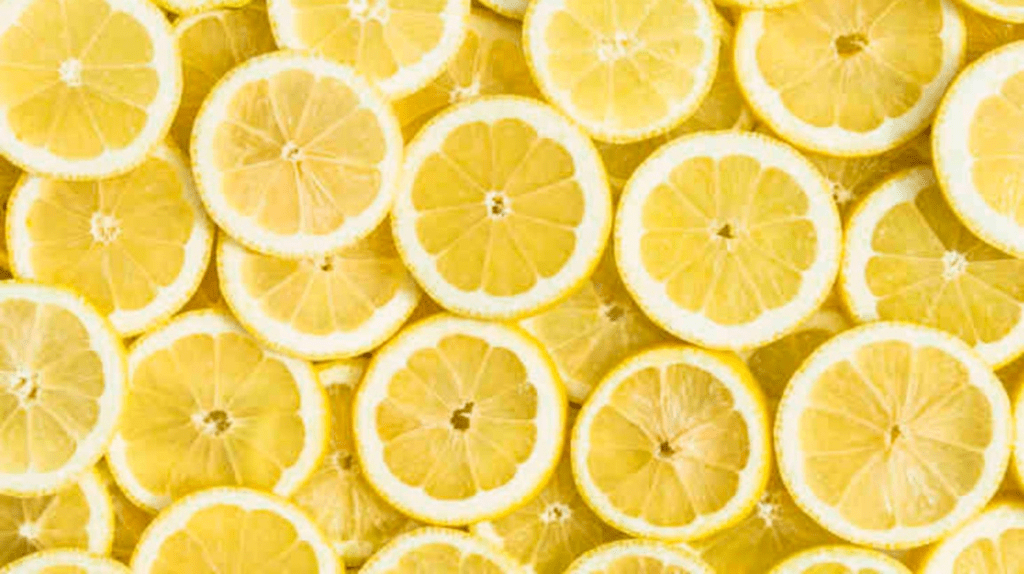
  1. slice lemons into rounds or half rounds
  2. arrange the slices, spaced out, onto parchment covered baking sheet
  3. place the baking sheet into the freezer for a couple of hours
  4. once the slices are frozen quickly transfer them to a plastic ziplock bag and seal tightly until ready to use
  5. For optimal taste use within a month or two

Tips

  1. removing as much air as possible from the freezing bag would help prevent freezer burning the lemon slices
  2. frozen lemon slices can be a great addition to smoothies for a nutritional punch and to cocktails as they help keep the drink cool without adding any extra water unlike melting ice cubes
  3. frozen lemon slices are not ideal for decorating deserts, so for creating beautiful looking deserts opt for a fresh lemon (and freeze the left over lemon for tea!)
  4. lemons are high in pectin – a type of fiber necessary for adding jelly consistency to our jams. use frozen lemons when making berry jam for added pectin and flavour.